
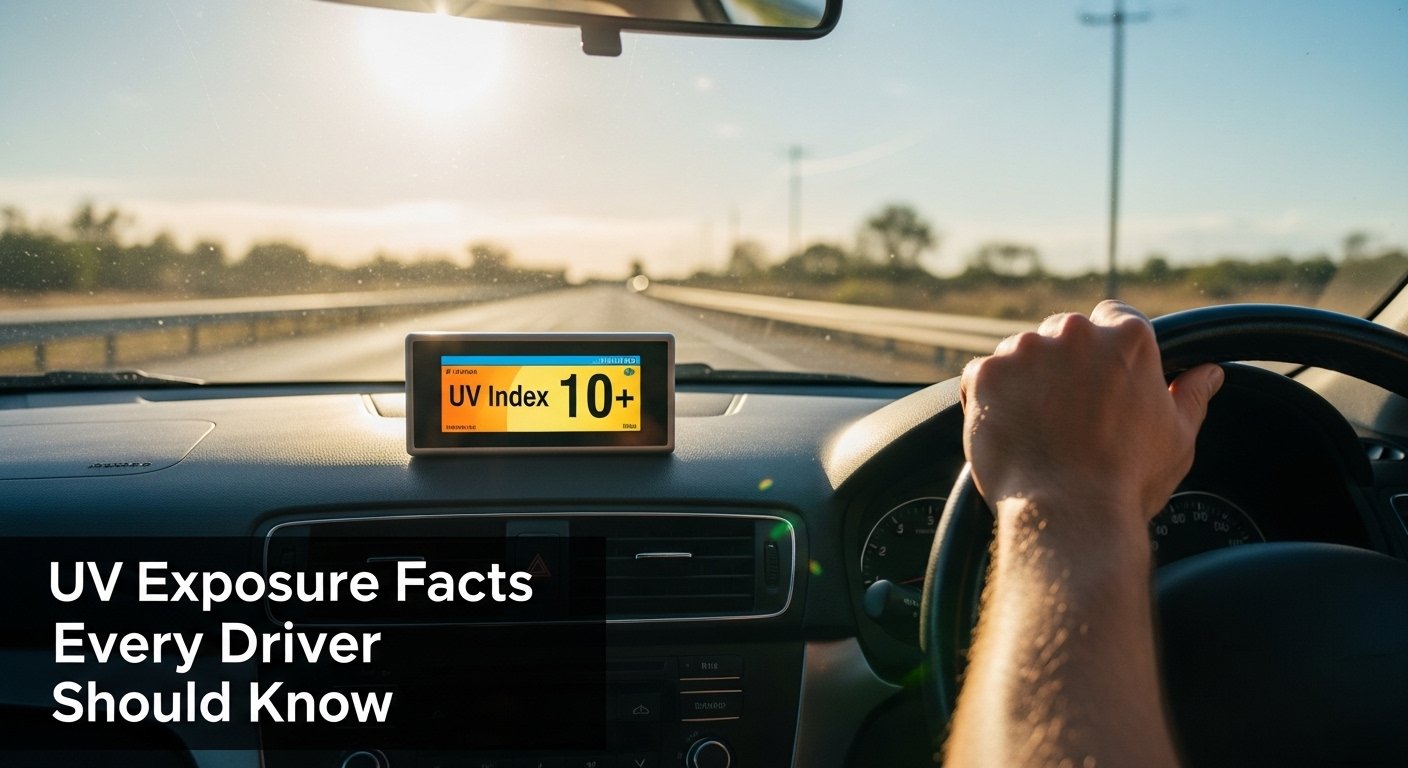
9 UV Exposure Facts Every Driver Should Know

Most of us know the drill when we head to the beach: sunscreen, sunglasses, hat, shade. We understand that direct sunlight can damage our skin. But what about when we are behind the wheel? For many, the car feels like a protective bubble, shielding us from the elements. Unfortunately, that sense of security is often misleading when it comes to ultraviolet (UV) radiation.
Driving puts you in a unique position regarding sun exposure. You are often sitting in direct sunlight for extended periods, usually on one side of your body, often without thinking about protection. Whether you are a daily commuter or a long-haul road tripper, understanding how UV rays interact with your vehicle is essential for your long-term health.
Here are nine facts about UV exposure while driving that might change the way you view your daily commute.
1. Windshields Protect You, Side Windows Don’t
There is a common misconception that all glass blocks UV rays equally. This isn’t true. By law, windshields are treated to shield drivers from some UV rays. They generally block the vast majority of UVA and UVB radiation. However, the side and rear windows are a different story.
Most side and rear windows are made of tempered glass, not the laminated glass found in windshields. While they block UVB rays (which cause sunburn), they often allow a significant amount of UVA rays (which cause aging and skin cancer) to penetrate. This is why drivers often notice more sun damage on their left arm and the left side of their face.
2. UVA Rays Are the Silent Damagers
It’s important to distinguish between the two main types of damaging UV radiation. UVB rays are what cause immediate, visible sunburns. Because glass blocks most UVB, you rarely get sunburned through a closed window.
However, UVA rays penetrate deeper into the skin. They are responsible for premature aging, wrinkles, and cellular damage that can lead to skin cancer. Because you don’t feel the “burn” from UVA rays, you might not realize damage is occurring until years later.
3. The “Trucker Effect” is Real
Dermatologists have long noted a phenomenon often called “unilateral dermatoheliosis,” or more colloquially, the “trucker effect.” This refers to patients presenting with significantly more sun damage, wrinkles, and skin cancer symptoms on the left side of their face the side next to the driver’s window.
A famous case study published in the New England Journal of Medicine showed a 69-year-old truck driver whose left side looked decades older than his right due to 28 years of sun exposure through a side window. It’s a stark visual reminder of cumulative damage.
4. Clouds Don’t Block UV Rays
Just because it is overcast doesn’t mean you are safe. Up to 80% of UV rays can penetrate through clouds. If you are driving on a gray day, you are still being exposed to radiation. The same logic applies to winter; snow can reflect up to 80% of UV rays, nearly doubling your exposure if you are driving through a snowy landscape.
5. Altitude Matters
For those living in mountainous regions, the risk is even higher. UV radiation increases by about 4% to 5% for every 1,000 feet of elevation gain. If you are driving through high-altitude areas, the atmosphere is thinner and absorbs less UV radiation.
This is particularly relevant for drivers in high-elevation cities. If you are looking for solutions like auto window tinting in Salt Lake, you are already on the right track, as the higher altitude there means stronger UV exposure compared to sea-level cities.
6. Factory Tint is Mostly Cosmetic
Many modern SUVs and minivans come with “privacy glass” on the rear windows. While this dark glass cuts down on visible light and glare, offering privacy for passengers, it does not necessarily offer high-level UV protection.
Factory-dyed glass is primarily for aesthetics. Unless the manufacturer explicitly states it offers UV protection, do not assume that a dark window is a safe window. Clear after-market films often block more UV rays than dark factory glass.
7. UV Exposure Affects Your Eyes, Too
It isn’t just your skin that suffers. Your eyes are highly susceptible to UV damage. Extended exposure while driving can contribute to cataracts, macular degeneration, and even ocular melanoma.
Glare from the road and other cars amplifies this issue. While your windshield blocks some UV, light entering from side windows or bouncing off mirrors can still reach your eyes.
8. The Interior of Your Car Suffers
If UV rays can damage durable leather and hard plastics, imagine what they are doing to your skin. UV radiation is the primary cause of fading upholstery and cracking dashboards.
If you notice your car’s interior fading on the left side or near the windows, take it as a warning sign. The same radiation breaking down the chemical bonds in your dashboard is hitting your skin.
9. High-Quality Window Film is a Health Investment
The most effective way to block UV rays in a vehicle—aside from wearing protective clothing and sunscreen—is applying high-quality window film. Modern ceramic and crystalline films are virtually invisible but can block up to 99% of harmful UV rays.
This doesn’t mean you need “blacked out” limo tint. You can install clear films that provide maximum UV protection without altering the look of your car or reducing visibility. For residents in sunny, high-altitude areas, investing in professional auto window tinting in Salt Lake is as much a health decision as it is a car accessory choice.
Protect Yourself on the Road
Driving is an unavoidable part of life for many, but sun damage doesn’t have to be. Understanding that your car’s standard side windows offer limited protection against UVA rays is the first step toward better health.
Whether you choose to wear sunscreen daily, keep a pair of UV-blocking sunglasses in the console, or install protective window film, taking proactive measures will pay off down the road. Don’t let your daily commute become a long-term health risk. Start protecting your skin today, so you can enjoy the drive for years to come.
