
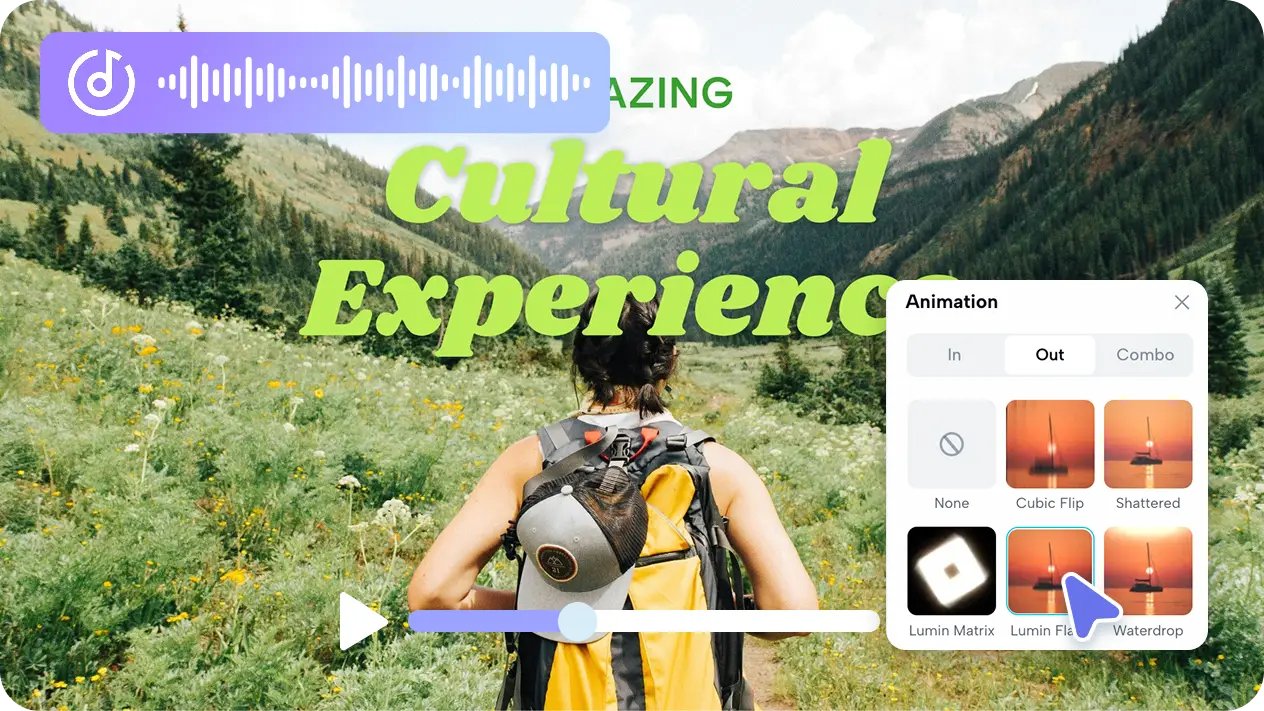
Create Cinematic Travel Stories from Vacation Photos with AI Video Tools

Travel photographs are those which we never wish to forget. Stunning ocean tides and bustling markets of street side and the solitude of mountain landscapes, all the pictures are fragments of a bigger voyage. However, the majority of these memories remain saved on phones or laptops, and are seldom returned to once the trip is over. Those still images can be brought back to life as immersive travel narratives with photo to video AI. You no longer have to go through a book of pictures that sit in one place, but you can now create a movie of your vacation pictures and it makes you feel like you are there. This is made very easy through platforms such as Pippit. Instead of acquiring the skills of using advanced editing programs or wasting time and resources assembling clips manually, you can post a series of traveling photos and have the AI create a visual impact video. Within minutes you have a concise series of snapshots that you have scattered all over who have been stitched together and look like a little travel movie.
The reason why travel videos are more effective than just photo albums
It is human nature that one pays more attention to movement rather than still images. Video is also a priority of social platforms since it keeps the viewers longer. It increases the chances of travel videos to be interesting as opposed to the individual photos that are posted separately. Video also enables the creators to pinpoint certain moments on purpose. You could start with a panoramic view of the destination and change to street scenes, buildings and cultural specifications. The last scene may be the serene view which completes the story.
When your vacation photos become a Pippit movie
Production of a travel video out of photos may seem technical, but Pippit streamlines it into an easy step-by-step process. The platform is made to assist the beginners to produce cinematic travel videos without the high-level of editing skills.
Step 1: Upload your images
- Go to the Pippit web page and click on Start for free to register and be able to access the main page.
- Select AI video generator, or the left menu, or select video on the main screen.
- In the “Turn anything into video” page, type in your idea of creation of the video.
- Add your series of images on your PC, Assets, Dropbox, link or phone by clicking on the + button.
Step 2: AI conversion of image to video
- Click on Choose a model, and choose one of the following models from the menu: Pippit Standard, Pippit Lite, Sora 2 or Veo 3.1.
- Should you wish to add an avatar, you must mention the AI avatar by clicking at the sign-in-icon.
- To provide the AI with a sample clip to follow, press Upload a reference video.
- Click on customize video settings, to select aspect ratio, duration and language.
- Click the button “Generate” and allow Pippit to read your prompt and make a video.
In this level, the platform analyses your photos and prompt to compile them into a photographic fluent sequence that can be taken as a movie traveling highlight.
Step 3: Edit & export video
Click to view your video and preview motion and other details.
In case any modifications need to be made on the video, you can access the video by clicking on the edit more option, which will open up the video in the AI video editing area where you will be in a position to split, crop, trim the video, replace the background, among others. You have the option to download your video to your device so that you can use it in the future or you can share it with your social accounts which are connected.
When technology is your tourist correspondent
The interesting characteristics of the current video generation tools include interpretation of storytelling cues. Other systems are almost an AI video agent, going through your photos, prompts and references to create a story on its own. The system does not require manual arrangement of all the scenes, but arranges the images in a natural and interactive manner. This enables travelers to be more creative and less technical in editing.
Introducing personality and narration to travel memory
Travel videos can be even more involving if they have narration or digital presenters. The use of technologies such aslip sync AIhas enabled virtual characters to talk in a natural manner and be in sync with audio to make a travel video seem like a storytelling voyage. An example is to use an avatar that would present the destination, the importance of landmarks or take viewers through the best part of the trip. This narration format gives it a personal touch and a reader/viewer can identify more with the experience.
Expanding travel stories on social media
Users tend to post on various sites such as Instagram, Tik Tok and YouTube. The video types and aspect ratios are preferred on each platform. It may be time consuming to edit individual versions. The AI-based tools make this process easier by creating variations of formats in a short period of time. Switching settings like time and orientation would allow a single set of photos to be several versions optimized for various platforms.
Transforming the travel memories into film souvenirs
Vacation photographs preserve the spirit of memorable moments, and turning them into film videos enables one to relive these moments once more. They are not fixed photographs but rather narratives that portray the feel of travel.
In the same spirit as you want to recreate your escapades, you can create a travel story with Pippit now. Take pictures, have AI create an engaging story about them, and transform the memories of your vacation into the moments worth capturing by a camera.
