
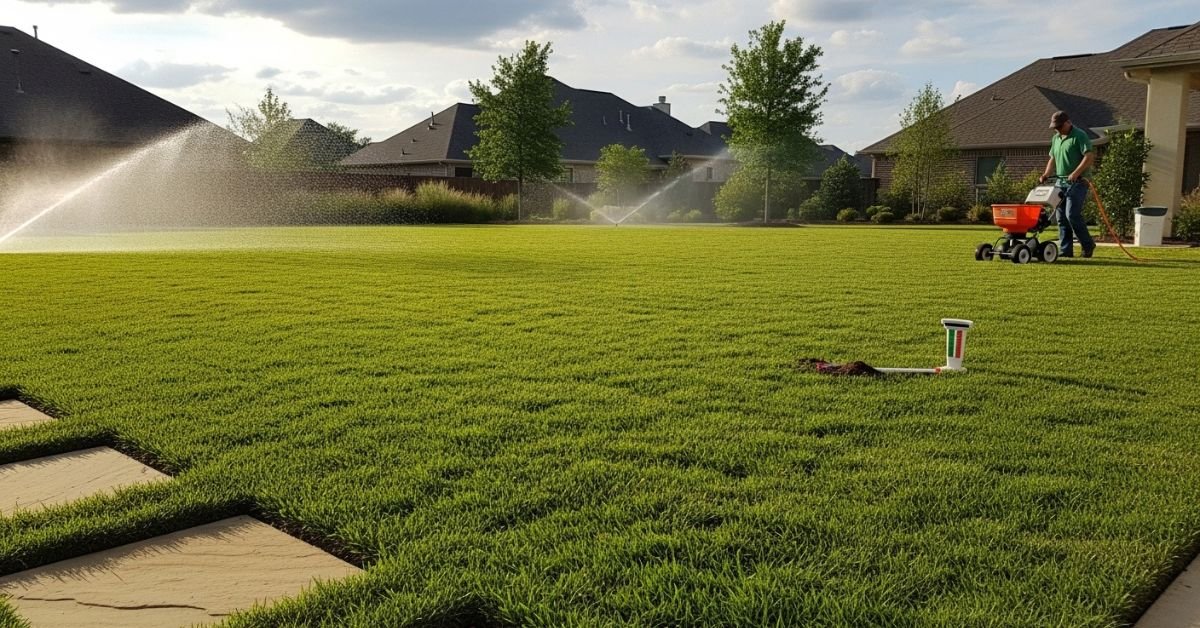
Why Some North Texas Lawns Stay Green All Summer (While Others Struggle)

Your lawn is one of the first things people notice about your home, so it should make a good impression.
In North Texas, however, maintaining that lush green look can be more challenging than many homeowners expect. Long stretches of heat, unpredictable rainfall, and heavy clay soil can quickly turn a promising yard into a patchy one.
Before blaming watering schedules or mowing routines, it helps to look at a key early decision you make for your yard: the type of grass you choose to plant.
Many lawn problems begin long before regular maintenance even starts. Choosing the best grass seed for North Texas can make a significant difference, especially in a region known for its intense sun and periodic droughts.
When you select the right turf and combine it with proper lawn care habits, maintaining a healthy, full lawn throughout the growing season becomes meaningfully easier.
Picking the Right Grass for North Texas
North Texas sits in what experts call a transition zone, meaning several grass varieties can grow here, but each comes with its own set of challenges. Summers are often extremely hot and dry, while winters occasionally bring freezing temperatures. Because of this climate mix, not every turf variety will thrive.
Some grasses are far better suited for local conditions than others:
- Bermuda grass: known for being durable and tolerant of full sun and heavy foot traffic.
- Zoysia grass: valued for its dense growth and moderate drought tolerance.
- St. Augustine grass: often preferred for lawns that receive partial shade during the day.
Choosing the right variety depends on your yard’s characteristics, including sunlight exposure, soil conditions, and how the lawn will be used. For example, Bermuda grass performs best in open, sunny yards but struggles in deep shade. St. Augustine can tolerate shade better but demands significantly more water.
When turf matches its environment, grass grows more evenly, handles stress better, and maintains a fuller appearance throughout the year.
Your Watering Routine Makes or Breaks Your Lawn
Watering is one of the most misunderstood aspects of lawn care. Many homeowners assume that giving grass more water will automatically make it healthier. In reality, overwatering can cause as many problems as underwatering.
In Texas, deep and infrequent watering typically works better than daily irrigation. When lawns receive larger amounts of water less often, the grass roots grow deeper into the soil, helping the turf become more resilient during periods of heat and drought.
Some common signs that a lawn may be receiving too much water include:
- Mushrooms appearing in the grass.
- Soil that remains constantly soggy.
- Yellowing or thinning patches.
- Water running off onto sidewalks or driveways.
A general guideline is to provide about one inch of water per week, including rainfall. Watering early in the morning is usually the best option because it reduces evaporation and allows the grass blades to dry naturally.
Consistent watering habits encourage stronger root systems, helping lawns remain healthier during the hottest months of the year.
Mowing the Right Way Helps Grass Stay Healthy
Mowing may seem like a simple task, but it has a significant impact on lawn health. One of the most common mistakes homeowners make is cutting their grass too short in an attempt to mow less often.
This practice, often called scalping, removes too much of the grass blade at once. Because the blade is responsible for photosynthesis, cutting it too short weakens the plant and slows its ability to recover.
A useful practice is to follow the one-third rule: that is, never removing more than a third of the grass height in a single mowing session.
Maintaining the correct height helps grass retain moisture, shade its roots, and grow more densely. It also helps reduce weed growth by limiting the amount of sunlight reaching the soil.
Another important detail is keeping mower blades sharp. Dull blades tear the grass too roughly, leaving ragged edges that can turn brown and make the lawn look stressed.
The Importance of Soil Health
While watering and mowing receive most of the attention, soil quality plays a major role in lawn performance. Texas soils often contain high amounts of clay, which easily compact over time.
Compacted soil restricts airflow and prevents water and nutrients from reaching the root system effectively. When this happens, even well-maintained lawns suddenly turn thin or patchy.
Homeowners can improve soil conditions by:
- Aerating the lawn to relieve soil compaction.
- Introducing organic matter, such as compost, to enhance soil structure.
- Avoiding heavy foot traffic when the soil is wet.
- Monitoring and controlling thatch buildup.
Thatch is a layer of organic material (such as dead roots and stems) that accumulates between the soil surface and living grass. A thin layer is normal, but excessive buildup can block water and nutrients from reaching deep into the soil.
Regular aeration and proper lawn care help manage thatch levels and allow roots to grow deeper and stronger.
Consistency Is the Key to a Healthy Lawn
Maintaining a healthy lawn in North Texas requires consistency. Choosing the right grass variety, watering appropriately, mowing at the proper height, and paying attention to soil conditions all contribute to stronger turf.
For homeowners who enjoy maintaining their outdoor spaces, these small adjustments can gradually transform their yards’ looks. When the foundation is strong and the maintenance routine fits the local climate, lawns become simpler to care for and far more visually appealing.
