
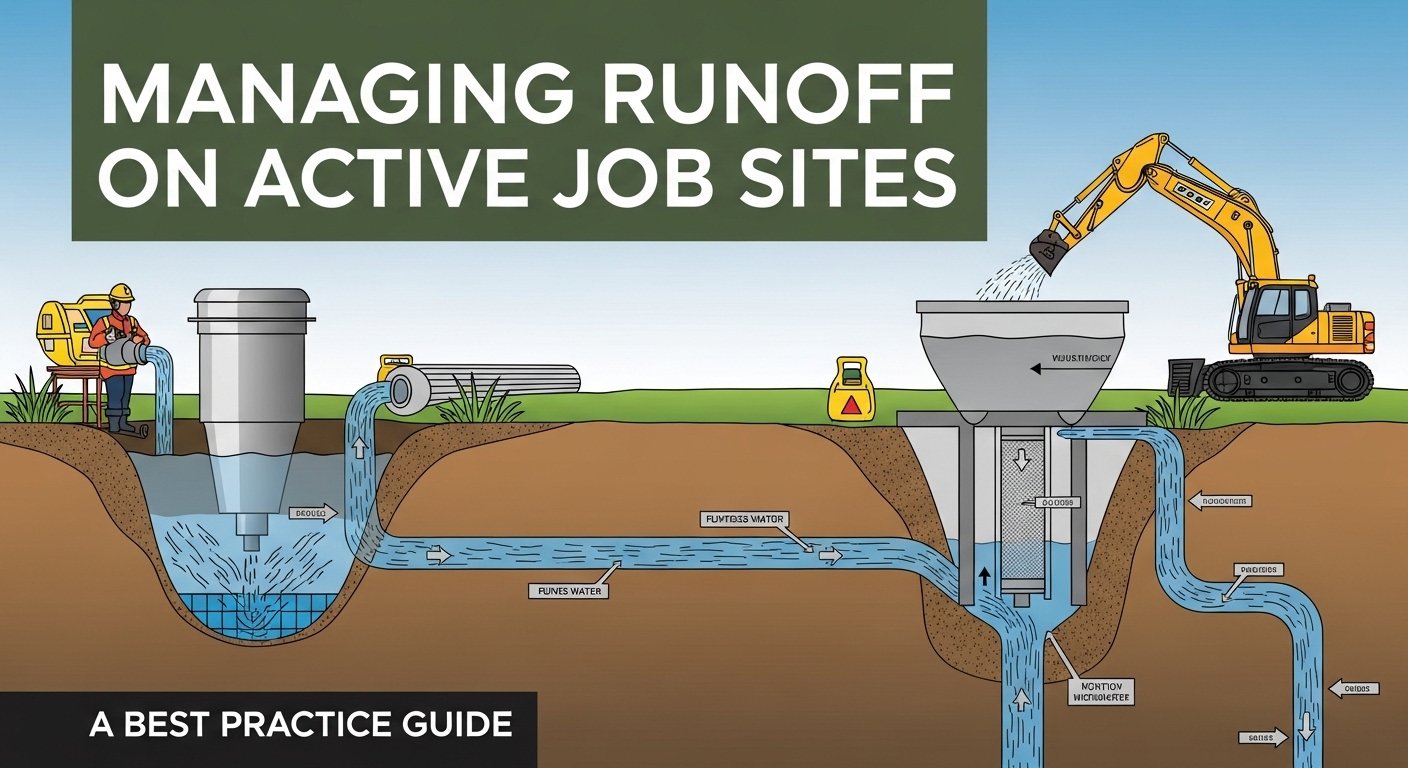
Managing Runoff on Active Job Sites: A Best Practice Guide

Construction projects are essential for progress, but they disrupt the natural landscape. When we clear vegetation and move earth, we change how water interacts with the land. Without the natural barriers of grass and trees, rain doesn’t just soak into the ground—it washes over it, picking up soil, debris, and pollutants along the way.
Understanding Environmental and Regulatory Impacts
The primary concern with construction runoff is sediment. While dirt might seem harmless, displaced soil is actually a major pollutant. When sediment-laden water enters storm drains, it often flows directly into local water bodies without treatment. This turbidity blocks sunlight, kills aquatic plants, and disrupts the food chain for fish and other wildlife.
Construction sites also introduce other contaminants. Oil, grease, concrete wash water, and chemical solvents can all hitch a ride on stormwater. Once these pollutants enter the public water system, the damage is difficult and expensive to reverse.
Because of these risks, federal and local regulations are stringent. In the United States, the Environmental Protection Agency (EPA) enforces the National Pollutant Discharge Elimination System (NPDES). Most construction sites disturbing one acre or more must obtain a permit that requires a detailed plan for managing stormwater. Ignoring these regulations is a gamble that rarely pays off, often leading to costly delays and enforcement actions.
Key Best Practices for Runoff Control
Effective runoff management starts long before the first excavator hits the ground. It requires a proactive approach that prioritizes prevention over cure. The goal is to keep clean water clean and to trap sediment before it leaves the site.
Minimize Disturbance
The most effective way to control erosion is to disturb as little land as possible. Plan your project phases so that you only clear the specific area you are working on. Leave existing vegetation in place for as long as possible, as roots are nature’s best soil anchors. If a specific area of the site won’t be active for a while, leave the grass and trees alone until necessary.
Stabilize Soils Quickly
Once land is disturbed, the clock starts ticking. Exposed soil is vulnerable to wind and rain. Stabilization techniques should be applied immediately to inactive areas. This can include:
- Temporary Seeding: Planting fast-growing grasses to hold soil in place.
- Mulching: Covering soil with straw, wood chips, or compost to absorb raindrop impact.
- Geotextiles and Mats: Using erosion control blankets on steep slopes where mulch might wash away.
Manage Water Flow
Don’t let stormwater run wild across your site. Divert clean runoff from uphill areas around your disturbed soil using diversion dikes or swales. This reduces the volume of water you need to treat. For water that does land on your active site, slow it down. The faster water moves, the more erosive power it has. Using check dams in drainage ditches can reduce velocity and allow sediment to settle.
Implementing Sediment and Erosion Controls
While erosion control keeps soil in place, sediment control captures the soil that does move. A robust strategy uses both. You need a multi-layered defense system to ensure that if one measure fails, another is there to back it up.
Perimeter Controls
The last line of defense is your site perimeter. Silt fences are the most common tool here. They filter runoff, trapping sediment while allowing water to pass through. However, they must be installed correctly—trenched into the ground—to work. Improperly installed silt fences are little more than decoration. Fiber rolls (wattles) are another effective option for perimeters and slopes, acting as a physical barrier to slow and filter water.
Inlet Protection
Storm drains are direct conduits to waterways. Every storm drain inlet on and immediately adjacent to your site needs protection. This usually involves installing filter fabric, gravel bags, or specialized inlet guards that prevent sediment from entering the pipe system while still allowing water to drain to prevent flooding.
Exits and Entrances
Vehicles leaving the site can track mud onto public roads, which then washes into storm drains during the next rain. Stabilized construction entrances are critical. These “tracking pads” are typically made of crushed stone or rumble strips that shake mud off tires before vehicles hit the pavement. In high-traffic or particularly muddy sites, a wheel wash station might be necessary.
The Role of SWPPP Services
To orchestrate all these moving parts, you need a Stormwater Pollution Prevention Plan (SWPPP). This is a comprehensive document that outlines exactly how you will prevent pollution. Creating and adhering to this plan is often a legal requirement. Many companies utilize professional SWPPP services in Utah to ensure their plans are compliant, practical, and properly updated as the project evolves.
Monitoring and Maintaining Your System
Installing controls is only step one. A silt fence that is knocked over or a storm drain guard that is clogged with mud won’t protect anything. Regular inspection and maintenance are what make runoff management effective.
Routine Inspections
Inspections should happen on a schedule—typically every 7 to 14 days—and, crucially, within 24 hours of a rain event. Walk the site and look for failures. Is the silt fence sagging? Has the mulch washed away? Are the construction entrances filled with mud? Document every inspection. These records are often your primary proof of compliance during a regulatory audit.
Timely Maintenance
When you find a problem, fix it immediately. Don’t wait for the next inspection cycle. If a sediment basin is full, clean it out so it can hold the next storm’s runoff. If a check dam has blown out, replace it. Sediment controls lose effectiveness over time as they fill up with the very dirt they are trying to catch. Treat maintenance as an ongoing operational task, not an afterthought.
Conclusion
Managing runoff on active job sites is a continuous responsibility that demands attention to detail and a commitment to best practices. It is not just about ticking boxes on a permit application; it is about respecting the environment that surrounds your project. By minimizing disturbance, implementing robust sediment controls, and maintaining vigilance through regular inspections, construction teams can operate efficiently without compromising the health of local waterways.
